If you run a business in South Africa and you don’t have WhatsApp integrated into your website, you’re making a mistake that’s costing you customers. Let’s explain why…
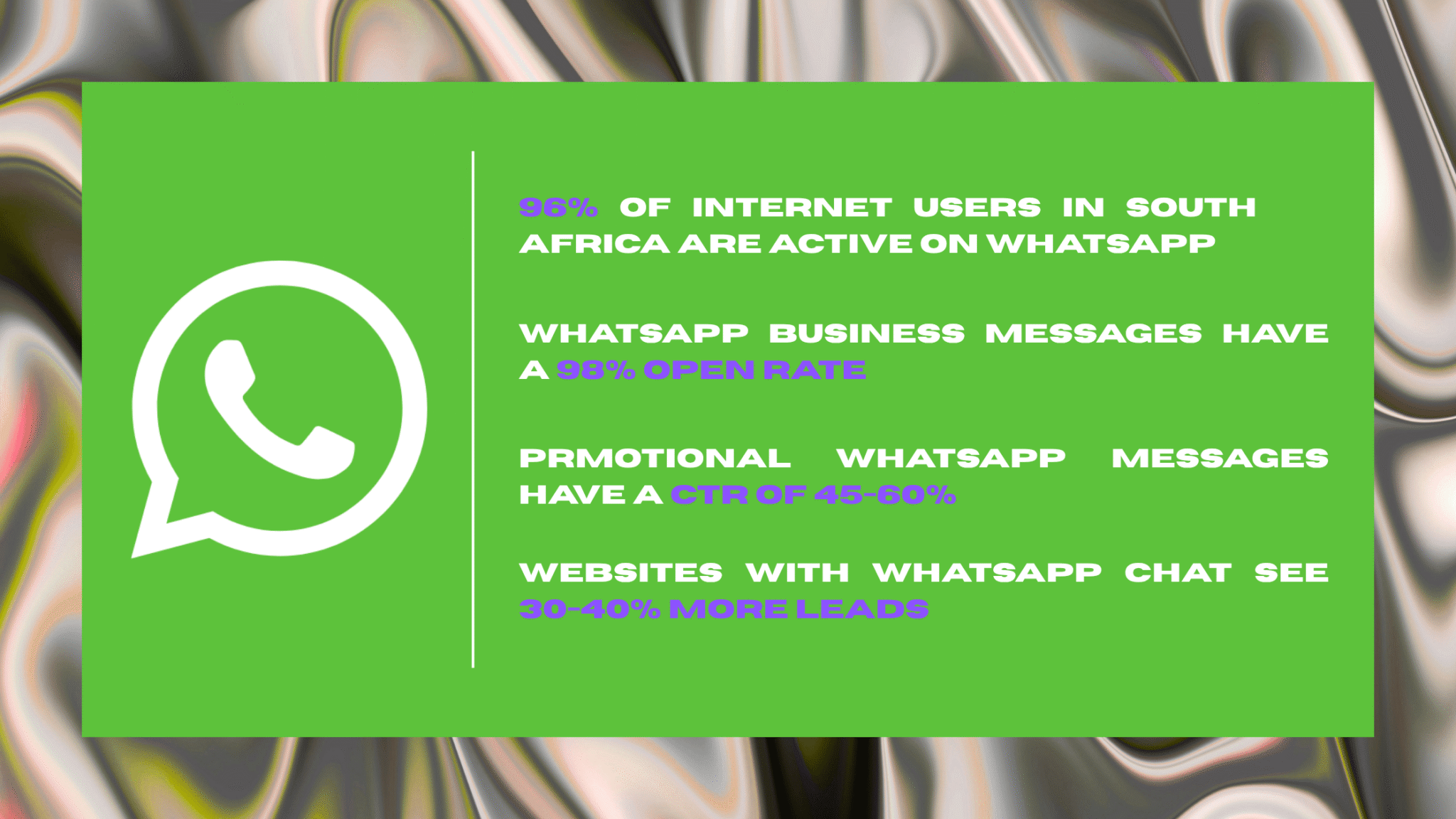
South Africans live on WhatsApp. That’s not an exaggeration. According to data compiled by Infobip, 96% of internet users in South Africa are active on WhatsApp, and we spend an average of nearly 25 hours per month on the app. That’s more time than users in Mexico, India, or Chile. Only Argentina, Indonesia, Colombia, and Brazil clock more hours.
When a South African customer wants to ask a business a question, their instinct is to send a WhatsApp message. They do it with their hairdresser, their mechanic, their dentist, and the guy who fixes their gate motor. It’s how commerce works here (and the rest of Africa). But most business websites still don’t accommodate this. They offer a contact form, maybe a phone number, and hope the customer picks up the phone or writes an email.
Here’s the problem: they won’t. This is why your South African customers don’t want to email you, and prefer WhatsApp instead.
The numbers tell the story
WhatsApp Business messages have a 98% open rate. Email averages about 20%. That means if you send a follow-up, a promotion, or a booking confirmation through WhatsApp, your customer will almost certainly see it. Through email, four out of five won’t.
On top of that, click-through rates on WhatsApp promotional messages range between 45% and 60%. Compare that to a social media post, where only 2 to 5% of your followers will even see it organically. There’s no marketing channel in South Africa that consistently matches those numbers.
A University of the Free State study examined how South African micro-retailers use WhatsApp Business for engagement. The researchers confirmed that WhatsApp Business is an accessible tool for small retailers to reach customers without significant marketing spend, and that businesses with clear communication strategies on the platform saw measurably better results.
How this connects to your website
Your website and WhatsApp should work together, not as separate channels. When someone visits your site, browses your services, and decides they’re interested, the next step should be as easy as tapping a button.
A click-to-chat widget on your site opens a WhatsApp conversation instantly. No forms. No waiting for a reply. The customer goes from browsing to talking in seconds. According to one analysis, websites with WhatsApp chat see 30 to 40% more leads than those using email forms alone.
We’ve written before about the difference between AI-built websites and professionally designed ones, and one of the biggest gaps is exactly this kind of detail. Template sites give you a contact page. A well-designed site gives you conversion points throughout the experience, and in South Africa, that means WhatsApp.
Don’t forget POPIA
South African businesses need to be mindful of the Protection of Personal Information Act when using WhatsApp for marketing. You can’t add someone to a broadcast list without their consent. If a customer messages you first, that’s an open conversation. But sending unsolicited promotional messages to people who haven’t opted in can get your WhatsApp Business account restricted, and it puts you on the wrong side of the law.
The easiest approach: at the end of a WhatsApp conversation with a customer, ask if they’d like to receive updates or promotions via WhatsApp. If they say yes, add them to your broadcast list. If they don’t, keep the channel open for support only.
Getting started is free
The WhatsApp Business app is free to download and use. Setting up a business profile takes about 15 minutes. You add your business name, logo, category, description, address, hours, and website link.
From there, the basic features cover what most SA small businesses need. You get labels to organise chats (new customer, pending payment, completed order). You get broadcast lists to send updates to up to 256 contacts at once. You get catalogue integration so customers can browse products inside the chat.
The only cost is adding the button to your website. If you’re comfortable with basic code, a click-to-chat link works. If you want something more polished, a floating widget plugin or a custom integration from your web designer will give you more control over positioning, branding, and automated responses. (PS: We can do that for you. Get in touch!)
Our recommendation for SA businesses starting out
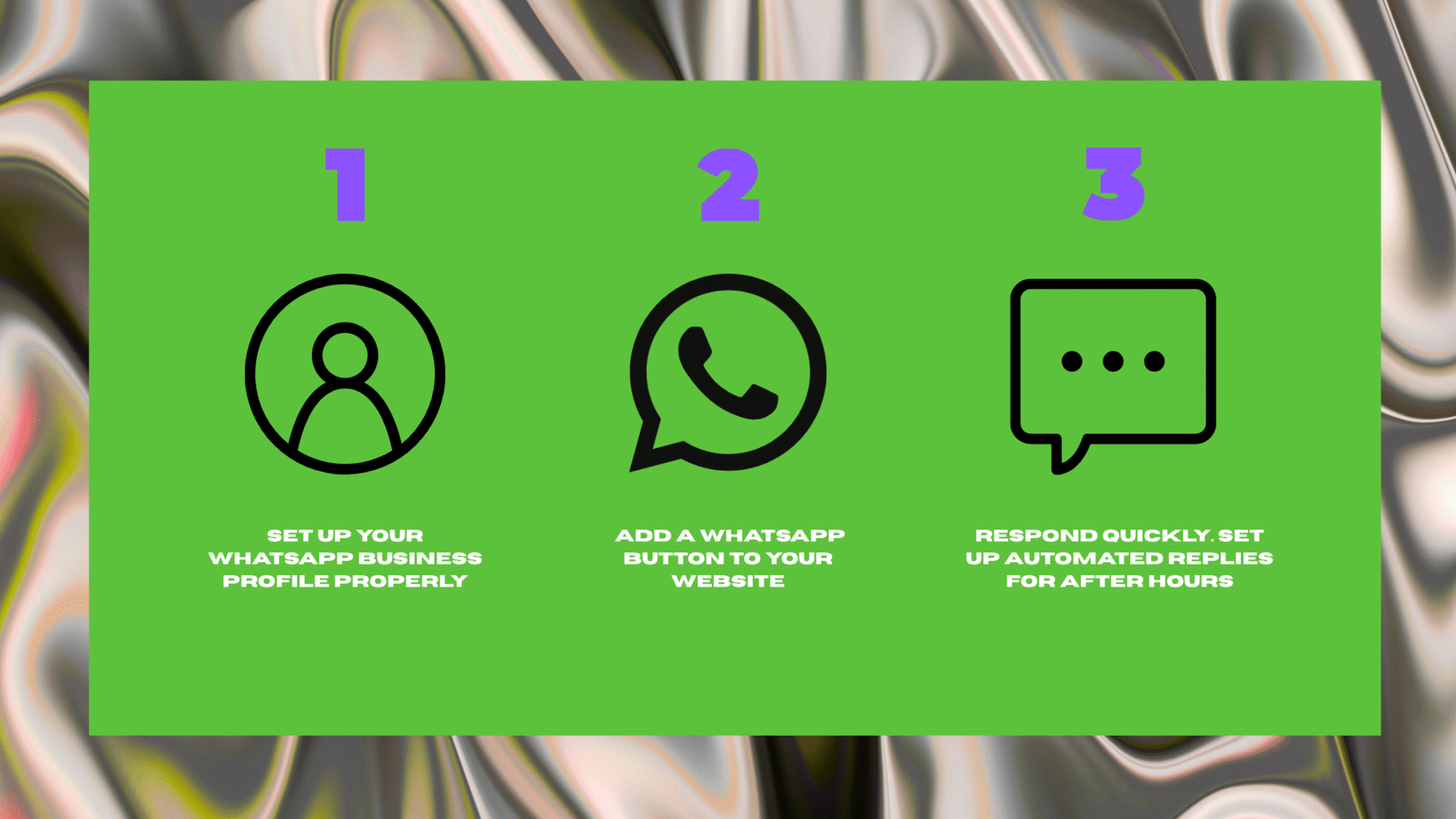
Start with three things. First, set up your WhatsApp Business profile properly. Treat it like a storefront. If your profile picture is your personal photo and your business description is blank, customers won’t take it seriously.
Second, add a WhatsApp button to your website. Put it on every page, not just the contact page. Most visitors won’t navigate to a separate contact page. They’ll leave first.
Third, be fast. WhatsApp creates an expectation of speed. If someone messages you and you reply three hours later, you’ve already lost the advantage. Set automated replies for after hours, and during business hours, aim to respond within minutes.
The bigger picture
South Africa’s small business environment is under real pressure. The Small Business Growth Index found that only 38% of businesses surveyed believe they could survive more than a year under current cost conditions without outside help. In that kind of environment, every edge matters. WhatsApp gives you a direct, trusted, high-response-rate channel that costs nothing to set up and connects you with customers in the way they already prefer.
If your website isn’t set up to capture those conversations, we can help. Reach out to us and we’ll take a look at what you have and what could work better.